Just before 11 p.m. on Friday, June 13, 1980, three neighbors let themselves into the brick house at 410 Dogwood Drive in Wylie, Texas. Allan Gore had been calling from Minnesota for hours with no answer. Richard Parker, Lester Gayler and Jerry McMahan found one-year-old Bethany crying in her crib after roughly 13 hours. In the utility room they found her mother. Betty Gore, a 30-year-old teacher, lay on the floor near a three-foot axe. She had been struck 41 times. The last person known to have seen her alive was a church friend who had stopped by that morning for a child’s swimsuit.
Two Couples From the Same Church
Candy Montgomery was 30 that summer. Born Candace Wheeler on November 15, 1949, she had married Pat Montgomery, an electrical engineer at Texas Instruments. In 1977 the couple moved with their two children to Collin County and joined the First United Methodist Church of Lucas. So did Betty and Allan Gore. Betty, born Bethany Pomeroy in Norwich, Kansas, had married Allan in January 1970 and taught middle school in Wylie. The families socialized, and their little girls became friends. In late summer 1978 Candy and Allan collided going for the same ball at a church volleyball game. By her later account, that was the moment she decided she wanted him.
An Affair With Rules
Candy did the asking, first after choir practice, then over lunch. In November 1978 she wrote a list of “whys” and “why-nots” on butcher paper; a few days later Allan called and said yes. The rules: weekdays only, twice a month, split every expense, and stop if either of them felt too much. Their first meeting was December 12, 1978, at the Continental Inn in Richardson, where the room cost $29.
Betty gave birth to Bethany in early July 1979 and struggled afterward. In October 1979 the Gores attended a Marriage Encounter weekend and came home talking about a new commitment. Within a week Allan met Candy in a North Dallas park and ended it. Candy promised not to call again.
Friday, June 13, 1980
Alisa Gore had slept over at the Montgomery house and wanted to stay for swimming lessons. Around 10 a.m., during a break from Vacation Bible School, Candy drove to Dogwood Drive for Alisa’s swimsuit. Betty offered coffee. Then, according to the only surviving witness, Betty asked whether Candy was having an affair with her husband. Candy said yes, but that it was over. She later testified that Betty came back from the utility room with the axe, struck her twice as she tried to leave, and hissed “shhh” at her during the struggle.
A five-year-old playing outside saw a woman in blue jeans leave in a station wagon around 11 a.m. Candy testified she had showered in the Gores’ bathroom. She drove home, changed, bought Father’s Day cards at Target in Plano, and returned to Bible school to collect the children.
A Fingerprint on the Freezer
Wylie had about 3,700 residents in 1980. Twenty-eight of the 41 blows had landed on Betty’s head and face; medical examiner Dr. Vincent DiMaio would testify that her heart was still beating for 40 of them. Investigators found bloody footprints and a bloody fingerprint on the chest freezer. Allan told police about the affair, and on June 17 Candy was questioned, fingerprinted and asked for her shoes. She was charged with murder on June 27, 1980. Bond was set at $100,000. Her church recommended Don Crowder, a civil attorney from the congregation who had never tried a criminal case.
The Trial in McKinney
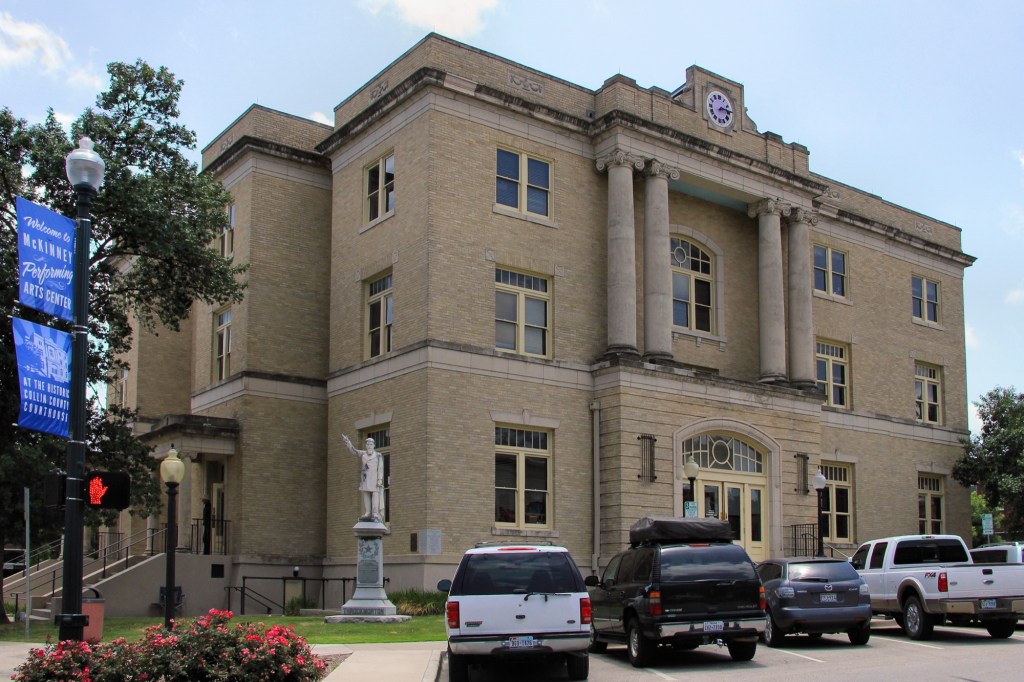
The trial opened in October 1980 in the old courthouse in McKinney before Judge Tom Ryan, with District Attorney Tom O’Connell prosecuting and Crowder and Robert Udashen defending. The jury was nine women and three men. Crowder did not dispute that his client had killed Betty Gore. On October 20 he announced self-defense, and on October 23 Candy took the stand and described the two blows Betty struck first and the word “shhh.” She had also passed a polygraph.
The hardest question was why a woman defending herself would swing 41 times. On October 27 Houston psychiatrist Dr. Fred Fason answered it: in three hypnosis sessions Candy had recalled being four years old, bleeding from a head wound while her mother hushed her. Betty’s “shhh,” he said, tripped decades of buried rage. The case recalls Lizzie Borden, another woman acquitted of an axe killing her town never stopped debating.
Not Guilty, and a Town Outraged
Closing arguments came on Wednesday, October 29, 1980. The jury deliberated about three hours and found her not guilty of murder and manslaughter. As Candy left the courthouse, the crowd shouted “Murderer!” Juror Alice Doherty Rowley later said the hypnosis testimony “never had a bearing on the verdict at all.” Betty’s father, Bob Pomeroy, said the family would never know what happened. Like the Hall–Mills murders half a century earlier, a church affair had produced a killing, a sensational trial and an acquittal that satisfied almost no one.
Allan Gore married a neighbor named Elaine in 1981. His daughters went to live with Betty’s parents, Bob and Bertha Pomeroy, in Norwich, Kansas, who adopted them in 1988. The Montgomerys moved to Georgia three months after the trial and divorced in 1986. Don Crowder took his own life in 1998.
Where They Are Today
Candy went back to her maiden name. Georgia issued a counselor license to Candace Wheeler in 1996 that lapsed in 2012, and reports in December 2025 placed her, at 76, still in Georgia and working in mental health. She has declined every interview since 1980; when Jessica Biel tried to reach her before Hulu’s “Candy,” which premiered May 9, 2022, the answer was no. HBO Max followed with David E. Kelley’s seven-episode “Love & Death,” starring Elizabeth Olsen, from April 27 to May 25, 2023; Jesse Plemons earned an Emmy nomination as Allan.
Allan Gore, long divorced from his second wife, lives in Sarasota, Florida, according to People. Alisa is an accountant in Kansas; Bethany, a school administrator in Las Vegas, named one of her daughters Betty. The house sold in March 2022 for $344,900. There have been no legal developments since 1980, and none can come: an acquittal cannot be appealed.
Why This Case Still Matters
The law gave a clear answer here and the facts never did. Only one person walked out of that utility room, and twelve jurors had to decide whether to believe her. The verdict still fuels arguments about how far self-defense stretches once an attacker is down, whether hypnotically refreshed memory belongs in a courtroom, and how much a defendant’s ordinariness sways a jury. As with the Villisca axe murders, the weapon became the story and a small town’s name got attached to it. Wylie now has more than 40,000 people, and newcomers still ask about the house.
A Mother Goose book was one of the few objects in that utility room without blood on it, and the jury accepted that a woman who said she was fleeing for her life had stopped first to shower, then driven to Target for Father’s Day cards.
Related Cases
- Lizzie Borden — Fall River, 1892: forty whacks, an acquittal, and a legend.
- The Hall–Mills murders — A minister, a choir singer, and a 1926 trial that convicted no one.
- The Villisca axe murders — Eight dead in an Iowa house in 1912, still unsolved.
Sources
- Texas Monthly — “Love and Death in Silicon Prairie, Part I: Candy Montgomery’s Affair”
- UPI Archives (Oct. 30, 1980) — “Conclusion of murder trial leaves many outraged”
- The Dallas Morning News — “Some in Wylie don’t know of 1980 ax slaying; others can’t forget”
- A&E — “The Betty Gore Murder: Could 41 Axe Blows Be Self-Defense?”
- People (via AOL, Dec. 2025) — “Where Is Allan Gore Now?”
- Wikipedia — Candy Montgomery
Watch the video version: new true-crime cases every day on Enigma Chronicles Reels on Facebook. Follow the page so you never miss a case.
Header photo: Historic Collin County Courthouse, McKinney, Texas, by Larry D. Moore, CC BY 4.0, via Wikimedia Commons (resized).


Leave a Reply