On July 26, 1974, a girl walking her dog in the dunes about a mile east of the Race Point Ranger Station in Provincetown, Massachusetts, found a woman lying dead on a beach towel. Her head rested on a pair of folded jeans. Her hands were gone. Nothing found with her gave a name. She would go without one for 48 years.
A Woman With No Name
The spot was inside the Cape Cod National Seashore, at the far tip of the Cape. Investigators said she had died from a blow to the head, probably several weeks before she was found. They believed her hands had been removed so she could not be identified by fingerprints. Some of her teeth had also been taken, though she had extensive dental work, including gold crowns.
Dental records were sent around the country. No match came back. She was buried in St. Peter’s Cemetery in Provincetown as an unidentified woman. She became known as the Lady of the Dunes.
Forty-Eight Years of Dead Ends
In 1980 her body was exhumed for the first time. Investigators took samples and used the skull to make a clay bust of her face. The bust resembled Rory Gene Kesinger, a 24-year-old woman who had been arrested in 1973, escaped from the Plymouth County jail and disappeared. The blood tests were inconclusive. Photos of the bust went out nationwide. Nobody named her.
In March 2000 she was exhumed again, this time for DNA. It was only the second time in Massachusetts history that a body had been dug up purely to identify it, and both times it was hers. That round did not give her a name either. Over the years investigators also canvassed neighborhoods, worked through thousands of missing-person files and commissioned age-regression drawings.
Theories That Did Not Hold
A case this old collects theories. One pointed at Boston gangster James “Whitey” Bulger, because pulling teeth to hide a victim’s identity was a method associated with him. It never went past speculation.
Another pointed at Hadden Clark, already in prison in Maryland for two murders. In a 2000 interview with The New Yorker, he claimed he had killed a woman in Provincetown. Police doubted him, citing his history of paranoid schizophrenia. In 2018 the author Joe Hill suggested she might have been an extra in Jaws, filmed on Martha’s Vineyard that summer, based on a woman in a bandanna who resembled the reconstruction. None of these led to her name.
A Name at Last
In 2021, the private lab Othram tested a sample from her jaw. Investigative genetic genealogy, which pairs DNA results with family trees and historical records, then traced the profile to her relatives. The method is the same one that has named victims in cases like the Bear Brook murders, and it is laid out step by step in how DNA genealogy is cracking America’s coldest cases.
On October 31, 2022, FBI Boston announced that the Lady of the Dunes was Ruth Marie Terry of Tennessee. She was 37 when she died. Investigators called her the oldest unidentified homicide victim in Massachusetts. They said she had ties to Tennessee, California, Massachusetts and Michigan. Why she was on Cape Cod in the summer of 1974 was still not clear.
Who Ruth Was
Ruth grew up in Whitwell, Tennessee. Her family described her as a free spirit who wanted more than country life offered. As a young woman she moved north to work at the Fisher Body auto plant in Livonia, Michigan.
There, in the late 1950s, she had a son. She was unmarried, and friends she knew from the plant raised him as their own. He grew up as Richard Hanchett. In 2018, after his adoptive parents had died, he took a DNA test. It connected him to the Terry family, who told him his birth mother had vanished decades earlier. In late October 2022, the FBI called him. He was in his 60s.
Ruth spent at least part of the 1960s in California. She used several names, including Teri Marie Vizina, Terry M. Vizina and Teri Shannon. Her family says her mother and grandmother searched for her for years.
The Husband
Two days after the identification, police asked the public for information about a man: Guy Rockwell Muldavin, an antiques dealer who also used the names Raoul Guy Rockwell and Guy Muldavin Rockwell. Nevada records show he married “Teri Marie Vizina” in a civil ceremony in Reno on February 16, 1974. Five months later, Ruth was dead.
He had a history. In April 1960 his second wife, Manzanita Rockwell, 40, and her 18-year-old daughter, Dolores Mearns, disappeared from their Seattle home. Police searching the house later found human remains in a septic tank. Muldavin was never charged with murder; prosecutors said they lacked the evidence. The FBI arrested him in New York in December 1960. In the end he was convicted only of grand larceny, over money taken from a relative of his third wife, and given a suspended 15-year sentence. He married at least five times.
On August 28, 2023, Cape and Islands District Attorney Robert Galibois closed the case. His office said that, based on the investigation, “it has been determined that Mr. Muldavin was responsible for Ms. Terry’s death in 1974.” According to the DA, the couple had visited her family in Tennessee after the wedding. When Muldavin came back from the trip, he was driving what was believed to be Ruth’s car and told witnesses she had died. When her brother tried to find her, Muldavin said they had fought on their honeymoon and he had not heard from her since. The DA did not lay out the evidence. Muldavin died in 2002, at 78, in Salinas, California. He was never charged in Ruth’s death and never stood trial.
After the Case Closed
NBC Boston, which followed the family, reported that a marker with Ruth’s name and photo was placed on her Provincetown grave in December 2022. In May 2023, it reported, Hanchett scattered some of her ashes from a hill near where she was found, and some of her remains were buried beside her mother in Tennessee. In late 2024, Oxygen aired a docuseries on the case. In July 2025, the Cape Cod news site CapeNews.net reported that Hanchett had published a memoir about his mother.
Why This Case Still Matters
For 48 years the case was treated as a puzzle about a stranger. The answer turned out to be a marriage. By the DA’s conclusion, the man who told her family he had not heard from her since their honeymoon was responsible for her death, and he lived another 28 years without being charged. Like the Isdal Woman in Norway, she was known for decades only by a nickname. Unlike the Isdal Woman, Ruth got her name back, because a lab could still read a piece of bone and her relatives’ DNA was there to match it.
Muldavin was suspected in three deaths across 14 years and convicted of none of them. In 1974 his Seattle file was 14 years old, and a marriage record with one of Ruth’s names sat in Reno. What else was sitting in a file somewhere, waiting for someone to connect it to the woman in the dunes?
If you or someone you know is being hurt by a partner, help is available 24/7 from the National Domestic Violence Hotline: call 1-800-799-7233 or text START to 88788.
Related Cases
- The Bear Brook murders: four victims in barrels in New Hampshire, and the DNA work that named them.
- How DNA genealogy is cracking America’s coldest cases: the method that named Ruth Terry, explained.
- The Isdal Woman: a woman found dead in a Norwegian valley in 1970, still without a name.
Sources
- FBI Boston — “Lady of the Dunes” Identified: FBI’s Use of Investigative Genealogy
- FBI Boston — Remarks Prepared for Delivery by FBI Boston SAC Joseph Bonavolonta at Press Conference Announcing the Identification of the Lady of the Dunes
- CBS News Boston — The Lady of the Dunes, 1974 Provincetown murder victim, identified as Ruth Marie Terry
- NBC News — ‘Lady of the Dunes’ is identified nearly 50 years after her mutilated body was found in Massachusetts
- The Boston Globe — Here’s what to know about the ‘Lady of the Dunes’ and her murder
- The Boston Globe (2000) — Police hope second exhumation will identify ‘Lady of the Dunes’
- KCBD / Associated Press — Authorities seeking info on husband of ‘Lady of the Dunes’
- The Boston Globe — Husband of ‘Lady of the Dunes’ killed in Provincetown in 1974 was also suspected of Seattle double slaying in 1960
- Boston 25 News — ‘Charming rascal’: Police seek info on con man husband of Lady of the Dunes
- NBC Boston — Family describes ‘earth-shattering’ realization of Ruth Marie Terry’s 1974 death
- NBC Boston — Son’s search for biological mom ends with discovery that she was a murder victim
- NBC Boston — The Lady of the Dunes finally has a proper grave marker
- NBC Boston — Son of murder victim ‘The Lady of the Dunes’ shares final goodbye
- The Boston Globe — Husband killed ‘Lady of the Dunes’ found in Provincetown in 1974, DA concludes
- CBS News — Killer identified in Massachusetts “Lady of the Dunes” cold case
- NBC News — Killer in nearly 50-year-old ‘Lady of the Dunes’ case identified as victim’s husband
- Court TV — Husband identified as killer in Lady of the Dunes cold case
- Oxygen — Cape Cod’s “Lady of the Dunes” Was Killed by Her Husband, Authorities Say
- Oxygen — Who Was the Lady of the Dunes? All About Ruth Marie Terry’s Life and Death
- Oxygen — How One Man’s “Unbelievable Journey” to Find His Mother Helped ID the Lady of the Dunes
- CapeNews.net — Lady of the Dunes is the subject of a new memoir
Watch the video version: new true-crime cases every day on Enigma Chronicles Reels on Facebook. Follow the page so you never miss a case.
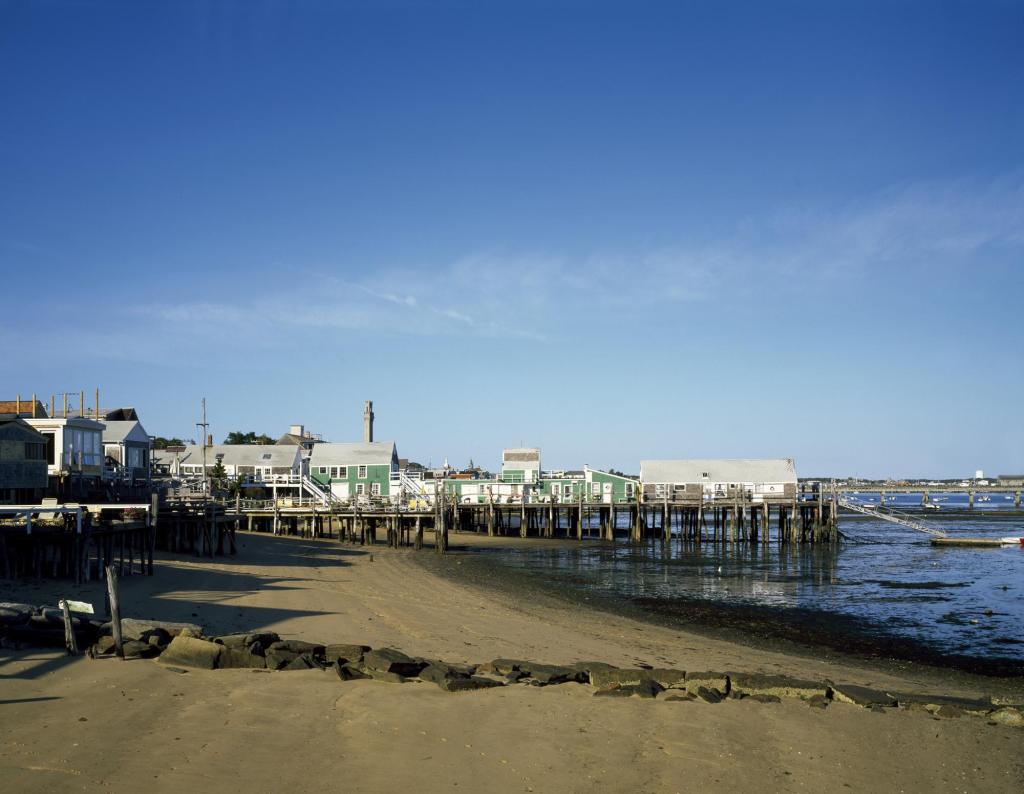
Header photo: Provincetown beach at low tide by Carol M. Highsmith, no known restrictions on publication (Carol M. Highsmith Archive), via Library of Congress.


Leave a Reply