On November 13, 1980, Patricia Jeschke did not show up for work in St. Joseph, Missouri. She was 31 and worked at the library. Her mother went to her apartment, climbed in through a window and found her daughter dead on the floor.
A Patient Just Out of the Hospital
Sandra Hemme was 20. She had a long history of mental illness and had been a patient at St. Joseph State Hospital, a psychiatric facility. She had just been discharged, against medical advice, around the time of the killing. About two weeks later, she turned up at a nurse’s home carrying a knife. Police found her hiding in a closet and took her back to the hospital.
Detectives began questioning her in late November. According to the Associated Press, she was on antipsychotic drugs that caused involuntary muscle spasms, and at times she was held in leather wrist restraints. Her current lawyers say she “could not hold her head up straight.” Officers interrogated her eight times over nearly two weeks, once at the crime scene, according to her later lawsuit.
Her story kept changing. She named a man and a woman. Then she named a man called Joseph Wabski. He was charged with capital murder until police learned he had been in a locked detox facility that night. On December 10, 1980, Hemme said she had acted alone. She was charged with capital murder the same day.
The Officer With the Credit Card
On November 13, the day the body was found, a man tried to use Jeschke’s credit card at a camera store in Kansas City, Missouri. A clerk later identified him as Michael Holman, a St. Joseph police officer. Holman said he had found the card in a purse dumped in a ditch.
A pickup truck had been seen near Jeschke’s apartment. It was Holman’s. About a month after the killing he was arrested for falsely reporting that truck stolen to collect insurance. He said he had spent the night of the murder with a woman at a motel. That could not be confirmed. Police found gold horseshoe-shaped earrings in his closet, and Jeschke’s father reportedly said he had bought them for his daughter.
The investigation into Holman lasted four days, according to the AP, and then stopped. In June 1981 he pleaded guilty to insurance fraud in a deal that included a promise not to prosecute other matters under investigation. He was later fired. Holman was never charged in Patricia Jeschke’s death. He died in 2015.
A Plea, Then a One-Day Trial
On April 10, 1981, Hemme pleaded guilty to capital murder so the state would not seek the death penalty. The judge first rejected the plea because she could not give enough details. After a recess, it went through. She was sentenced to life in prison.
In 1984, an appeals court threw out the plea. In June 1985, she went on trial in Buchanan County. It lasted one day. The jury did not hear about Holman, the truck, the earrings or the conditions of her interrogations. Jurors convicted her, and she was sentenced to life without parole for 50 years. Apart from her own statements, the state had no evidence linking her to the crime, according to the National Registry of Exonerations.
In prison, she later received an additional 12 years for violence, including a 1990s attack on a prison worker, the AP reported. Around 2006 she began a medication that worked and wrote to the Innocence Project. By then, the physical evidence had been destroyed. DNA testing was not possible.
What the Files Showed
In February 2023, her lawyers filed a habeas petition in Livingston County, where she was held. It included police files her trial lawyers had never seen. Among them were FBI reports. One found that a hair on the bedsheet was microscopically similar to Holman’s head hair and that he could not be ruled out as its source. Holman also could not be ruled out as the source of a palm print found near the body. The 1985 prosecutor testified he had never received the FBI reports.
On June 14, 2024, Judge Ryan Horsman ruled that Hemme had shown “clear and convincing evidence” of “actual innocence.” He wrote that “no evidence whatsoever outside of Ms. Hemme’s unreliable statements connects her to the crime.” In contrast, he found that “the evidence directly ties Holman to this crime and murder scene.” That is the judge’s finding in a habeas case. Holman was never tried and could not respond.
The Attorney General Says No
Missouri Attorney General Andrew Bailey appealed. His office argued the evidence was not new, that Hemme was a safety risk, and that she should now start serving the 12-year sentence from the prison cases. An appeals court and then the Missouri Supreme Court sided with her release.
After Horsman ordered her freed, Bailey’s office reportedly called the warden and told the prison not to release her. Horsman threatened to hold the office in contempt. On July 19, 2024, Hemme, 64, walked out of the Chillicothe Correctional Center. Her sister, daughter and granddaughter met her at a nearby park.
Free, Then Exonerated
On October 22, 2024, a panel of the Missouri Court of Appeals, Western District, unanimously upheld Horsman. It said Bailey’s claim that he had been ambushed by an FBI report “borders on the absurd,” and that St. Joseph police had “ignored and buried evidence coming into its possession.” Buchanan County Prosecutor Michelle Davidson had 10 days to say she would retry the case. She did not. On December 3, 2024, Horsman ordered Hemme “permanently and unconditionally discharged from custody.”
The Innocence Project calls her the “longest-known wrongly incarcerated woman in American history.” The National Registry of Exonerations says her more than 43 years is the longest time served by an exonerated woman in U.S. history.
Missouri pays compensation only to people cleared by DNA evidence, so the state owes her nothing, the Kansas City Star reported. On July 24, 2025, she sued the City of St. Joseph and eight police department employees in federal court, alleging a coerced false confession and malicious prosecution. On April 10, 2026, U.S. District Judge Roseann Ketchmark refused to throw out the state-law claims against the city on immunity grounds. A November 2025 scheduling order set a jury trial for March 1, 2027. As of October 2026, no settlement has been reported. The defendants have not been found liable.
Why This Case Still Matters
No witness and no physical evidence ever tied Sandra Hemme to the murder. Her conviction rested on what a heavily medicated 20-year-old said after days of questioning. Like the Betsy Faria case, where Russ Faria was wrongly convicted in Missouri, it shows how fast an investigation can lock onto one person. And like the Sherri Rasmussen case in Los Angeles, it raises a hard question about how police look at one of their own.
Her case also shows the gaps that remain after a court says “innocent.” She spent almost six more months fighting the state after the June 2024 ruling, and Missouri’s law gives her no payment because DNA played no part in clearing her.
No one has been convicted of Patricia Jeschke’s killing. The man a judge tied to it is dead. The woman who confessed did not do it. Who answers for the 43 years in between is now up to a jury.
Related Cases
- The West Memphis Three — three teenagers convicted in Arkansas, a confession from a vulnerable suspect, and an Alford plea after 18 years.
- The Pam Hupp case — a Missouri husband wrongly convicted of his wife’s 2011 murder, then acquitted at a second trial.
- The Sherri Rasmussen case — a 1986 Los Angeles killing that went cold for 23 years until DNA pointed to an LAPD detective.
Sources
- Innocence Project — Sandra Hemme Is Exonerated After 44-Year Battle to Prove Her Innocence
- National Registry of Exonerations — Sandra Hemme
- Associated Press (via ABC17) — Missouri woman’s murder conviction tossed after 43 years. Her lawyers say a police officer did it
- Associated Press (via ABC17) — Appeals court orders release of woman whose murder conviction was reversed after 43 years in prison
- CBS News — Missouri woman who spent 43 years in prison is free after her murder conviction was overturned
- St. Louis Public Radio / KCUR — Missouri court vacates Sandra Hemme murder conviction, blasts attorney general’s arguments
- KY3 (Associated Press) — Freedom is permanent for Missourian described as the longest-held wrongly incarcerated woman in US
- The Kansas City Star (via AOL) — Missouri wrongfully imprisoned Sandra Hemme for 43 years. Why state won’t compensate her
- St. Louis Public Radio / KCUR — Sandra Hemme’s case and false confessions (Feb. 4, 2025)
- Loevy + Loevy — Press release: Sandra Hemme files federal lawsuit
- KCTV5 — Suit claims Missouri police department coerced false confession out of wrongfully imprisoned Sandra Hemme
- Death Penalty Information Center — Exoneree Sandra Hemme’s case reflects broader pattern of opposition to innocence claims from Missouri Attorney General’s Office
- CourtListener — Hemme v. City of St. Joseph, Missouri, order of April 10, 2026 (U.S. District Court, W.D. Mo.)
- Justia Dockets — Hemme v. The City of St. Joseph, Missouri et al, 5:2025cv06132
Watch the video version: new true-crime cases every day on Enigma Chronicles Reels on Facebook. Follow the page so you never miss a case.
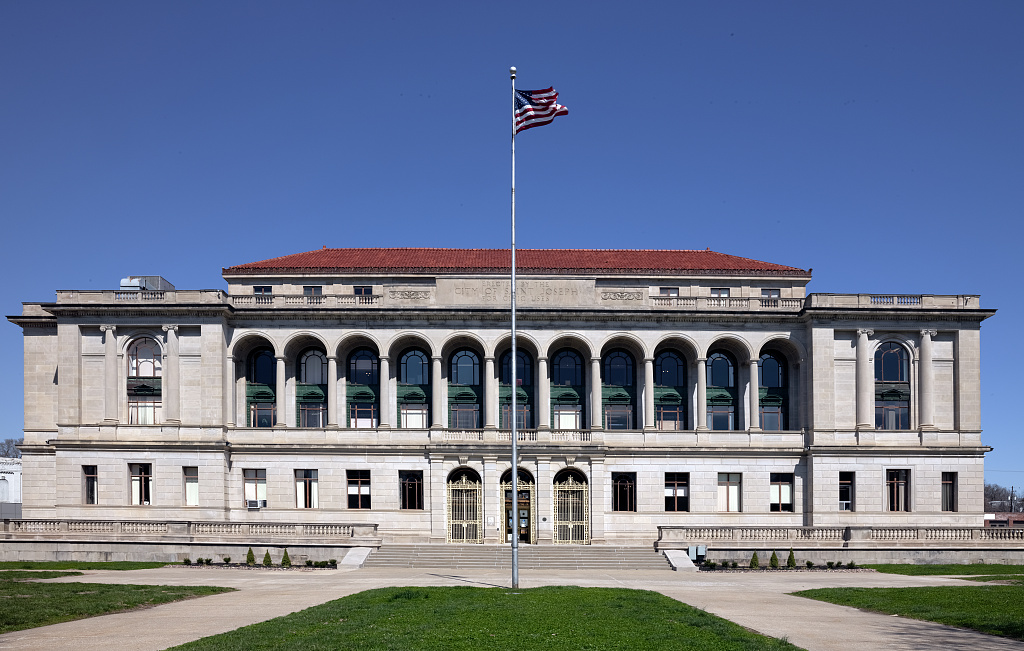
Header photo: City hall and government office building in St. Joseph, Missouri (2021) by Carol M. Highsmith, no known restrictions on publication, via Library of Congress, Carol M. Highsmith Archive.


Leave a Reply